
Grocery Shopping in 2025 — Apps vs Offline Stores which is better choice for my shopping
Let’s be honest — grocery shopping has completely changed.
Five years ago, my weekend looked like this:
pushing a trolley, comparing mangoes, arguing with the sabzi-wala —
“bhaiya, 10 kam kar do 100 ki sabzi li Hai” 😅
That whole experience felt real, human… and honestly, a little tiring.
But in 2025… it’s totally different.
“Now I can order groceries while half-asleep in bed.
One tap → items in the cart.
Second tap → delivery guy at the door.
Life feels easier — almost too easy.”
This small experiment helped me finally understand the real difference between apps vs offline stores in 2025.And honestly?
The difference shocked me.
- Apps saved time…
- Offline stores saved money. (And this is exactly where the apps vs offline stores debate actually begins)
- Apps felt convenient…
- Offline felt controlled.
So here’s the real, simple breakdown of what I noticed — not as an expert, but as a regular person trying not to overspend in 2025 👇
💡 What Really Changed? (The Core Difference in apps vs offline stores)
If you think apps vs offline stores is a simple choice, trust me — it’s not.
- Offline feels real
- Apps feel magical… almost too magical
Here’s the quick visual 👇
| Feeling | Offline Stores 🛍️ | Apps 📱 |
|---|---|---|
| Money feel | Real — you see bill rising | Invisible — just a tap |
| Speed | Slow | Fast ⚡ |
| Temptation | Low | High (offers everywhere) |
| Freshness check | Manual | Depends on trust |
| Convenience | Medium | Sky-high 🚀 |
Also Read – What Is Digital Distractions Guide.
And this small difference changes how I shop.
The Convenience Trap ( Apps vs Offline Stores ) : How Grocery Apps Change Our Spending
🥦 1. The “vegies smell Advantage” — Offline Still Wins
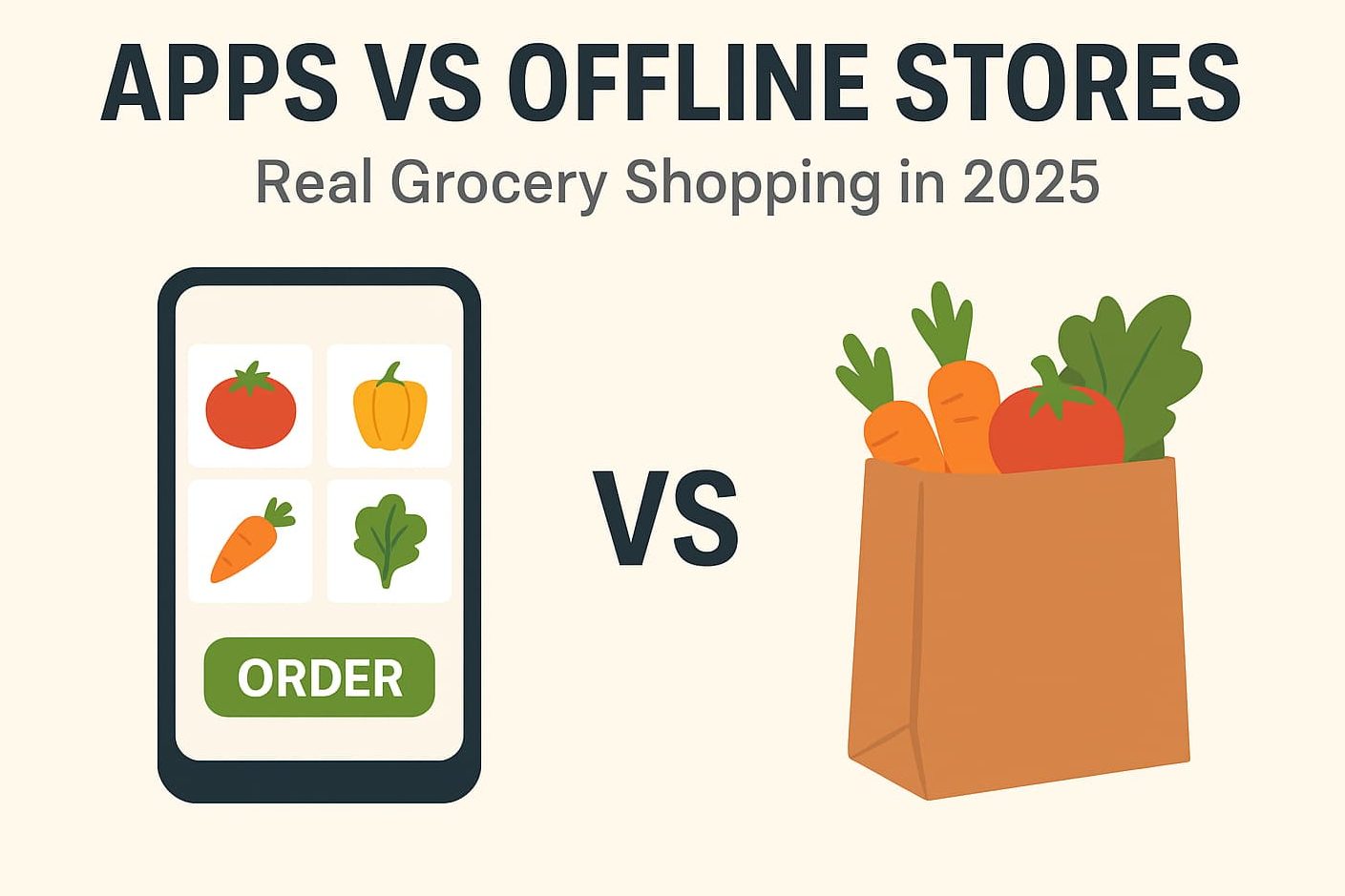
This is one area where in the apps vs offline stores comparison, offline clearly wins.
I didn’t even realize how much I missed touching tomatoes and smelling fresh coriander… until I went back to the store 😅
Offline shopping has its own feel —
it genuinely feels like I’m in control.
In the store:
- I choose the ripest fruit
- I take the exact quantity
- And whatever I don’t like, I instantly reject 😎
Online?
You just keep ordering… and hope the person packing your veggies is in a good mood that day 😭
🧩 Tiny Moment
Once I ordered apples online…
They arrived GREEN 🟩
Exactly like an office highlighter.
Moments like this truly highlight the apps vs offline stores experience gap.
If I were in the store,
I would have never picked them.
Sometimes convenience hides these small details.
⚡ 2. The “Too Easy to Add” Problem — Apps Trick Your Brain
Impulse buying is where the apps vs offline stores difference becomes very obvious.This part honestly isn’t just my observation…
many tech advisers and money coaches have talked about it too.
In online grocery shopping, your bill keeps growing silently,
and you don’t even realize it.
That offline “weight warning” from the trolley is missing here 😅
— the one that naturally forces you to stop.
Apps make impulse shopping almost 10× easier:
where just a single click can add something —
like a pair of ₹300 earbuds —
and you don’t even notice the money leaving.
- “₹40 delivery fee waived if you add ₹80 more” 😏
- “Buy 1 get 1 free” traps
- “Suggested items you may like”
- “Frequently bought together”
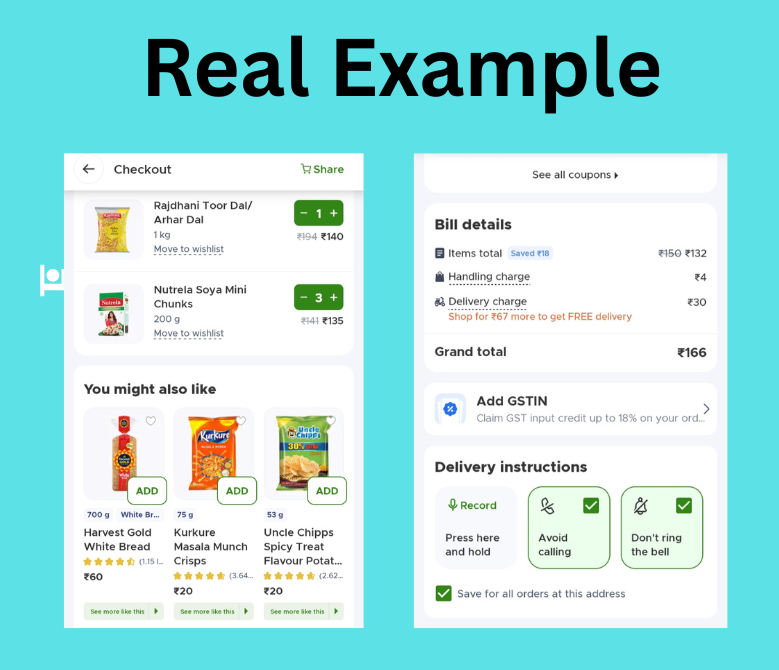
And before you know it…
your ₹500 bill slowly turns into ₹1200. 🫠
But 🏪 In the store?
In the apps vs offline stores comparison, offline gives your brain physical warnings apps never can.
You see the basket filling up
You feel the weight in your hand (reminding you that you’ll actually have to pay for all this)
And your mind automatically goes —
“Okay… that’s enough now.”
📦 3. Ultra-Convenience of Apps — Hard to Beat
Convenience is the strongest argument in the apps vs offline stores battle. To be honest… grocery apps have made us so dependent that sometimes it feels like life pauses without them.
And the most dangerous part?
They make everything feel too easy.
So easy that the brain doesn’t even get time to think.
Here’s the daily scenario 👇
- Craving ice-cream at 12 am? → Order.
- Running late for office? → Order.
- Feeling a little sick? → Order.
- Forgot one small item? → 10-minute delivery… order.
Slowly-slowly, it stops being a shopping habit…
and becomes a reflex.
Pick up the phone, scroll, tap — done.
💡 The Moment It Hit Me
One day I just wanted to order bread…
The app instantly recommended:
- “Buy eggs with it”
- “Special bun at ₹30 off”
- “Try this new peanut butter”
This tiny moment again shows how apps vs offline stores shape our decisions differently.
And before I knew it —
my bread worth ₹45 turned into a ₹300 bill 😭
Looking for more – we also try How Reducing Apps Overload Help Save Money.
🧠 4. The Psychological Game — Online Grocery Feels Cheaper Even If It Isn’t
A weird thing happens with apps:
PricThis one honestly surprised me the most.
“Psychology is a huge but underrated part of the apps vs offline stores discussion“
Something strange happens when we shop through apps:
Prices look smaller on the screen than they feel in real life.
₹199 looks “cute.”
₹200 note feels big in your hand.
Crazy, right? But it’s real psychology.
💡 How It Actually Plays Out
Here’s what usually happens when I shop online:
- ₹79 chips
- ₹49 chocolate
- ₹89 bread upgrade
- ₹169 snack pack
- ₹149 extra fruit box
Individually, they feel harmless:
“Okay yaar, it’s fine.”
But together?
Suddenly the bill is ₹2000 and I’m staring at my phone like:
“How did this happen?” 😳
🧾 Offline Shopping Hits Different
In the store, the brain works more honestly:
- You see the price tags clearly
- You compare items with your own eyes
- You feel the total rising
- You mentally calculate without even trying
📊 Mini Insight (Simple & Clear)
| Type of Buying | Offline 🛍️ | Apps 📱 |
|---|---|---|
| Awareness | High | Low |
| Impulse buys | Low | High |
| Freshness | Self-selected | Luck-based |
| Time | More | Less |
| Spending | Controlled | Unpredictable 😅 |
🧺 5. When Offline Stores Actually Feel Better
There’s something unexpectedly peaceful about offline grocery shopping —
almost like a tiny break from the digital chaos.
I didn’t notice it at first, but every time I walked into a store:
- I slowed down
- I became more mindful
- I only picked what I genuinely needed
No push notifications.
No “Flash Sale ends in 5 minutes.”
No recommendations trying to hijack my choices.
Just me… aisle by aisle… choosing things calmly.
🌿 Why Offline Feels So Grounded
Lifestyle experts often say this:
“Offline grocery shopping feels like mindful living.”
And honestly, I agree.
Because offline:
- I see the real size of vegies and fruits.
- compare quality with eyes
- You don’t over-buy
- I stay connected with what I actually need
It’s simple, slow, and surprisingly calming.
✨ Summary Snapshot
| Category | Offline Grocery 🛍️ | Grocery Apps 📱 |
|---|---|---|
| Control | High | Low |
| Freshness | Guaranteed | Mixed |
| Time | Slow | Instant |
| Overspending risk | Low | High |
| Experience | Real, mindful | Convenient, impulsive |
✔️ My Quick Solutions (What Actually Worked for Me) in ( Apps vs Offline Stores )
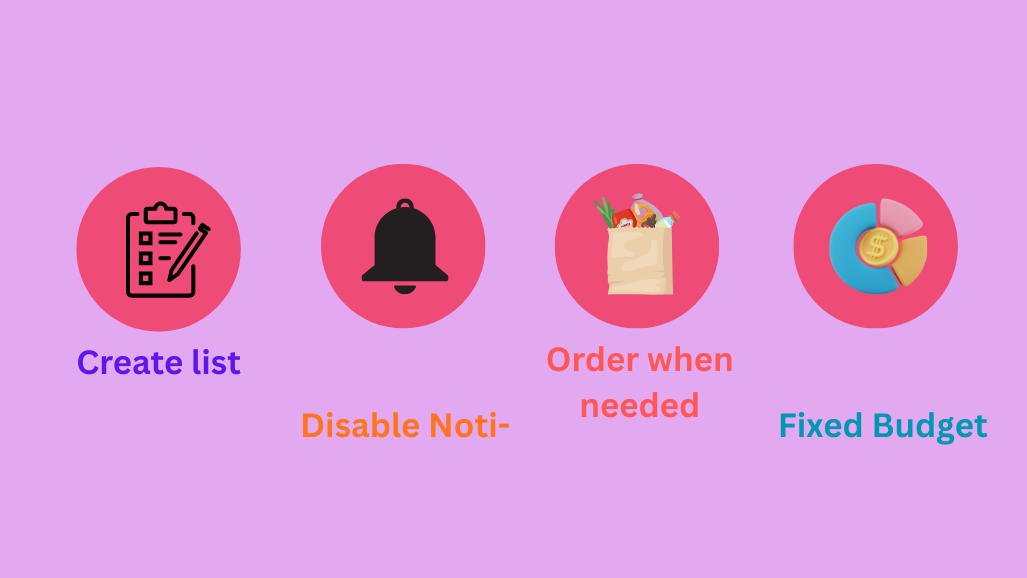
1. Create your list before opening any app
Helps: Stops impulse buying.
2. Disable push notifications
Helps: No more random offers tempting you.
3. Use apps only for heavy items
Helps : Rice, oil, detergent → online
Veggies, fruits → offline
4. Fix a weekly budget
Helps: Apps don’t show your monthly total — but you should track it.
5. Mix both worlds
Helps: Not everything needs a doorbell.
🔍 Key Takeaways
- Apps = convenience, speed, offers
- Offline stores = awareness, control, quality
- Tech makes things easy, but also makes overspending easy
- Best results come when you combine both methods
- Grocery shopping is now a choice between comfort and control
FAQ (Frequency Asked Questions)
Q1. Are grocery apps more expensive?
Mostly yes — hidden charges, delivery fees, and surge pricing add up.
Q2. Are offline stores cheaper?
For fresh items, usually yes.
For packaged items, offline and apps are almost the same.
Q3. Should I shift fully offline?
No — mix both depending on what you’re buying.
Q4. Is instant delivery worth it?
Only when necessary. For regular shopping, it increases monthly bills.
Conclusion
At the end of the day, I’m not saying grocery apps are a bad choice — not at all.
Because honestly, apps have made life unbelievably smooth — fast deliveries, zero effort, and a level of comfort we never imagined.
But somewhere between all those “Add to Cart” clicks…
I realized I was missing the real feel of grocery shopping.
👨🦰My personal learning?
Don’t turn it into a fight between apps and offline stores.
Use both wisely.
When you’re busy → apps are perfect.
When you want control → offline shopping is perfect.
ecause at the end, apps vs offline stores isn’t a battle — it’s about choosing what works smarter for you.
We’re not digital minimalism experts — just regular users who wanted more focus. What worked for us might inspire you too. For more useful advice, check out our Telegram channel.
