

What Is Cash Only Month Challenge in India – How I Control Overspending [2025] Guide
Let’s be honest — spending money today has become way too easy.
Five years ago, my weekends looked like this: I’d take cash, go to the market, check every rupee, and sometimes even haggle with shopkeepers —
“yrr bhai ye phone cover 170 me milta h” 😅
It felt real, human… and honestly, a little tiring.
But in 2025… it’s totally different.
“One tap → money gone.
Second tap → groceries delivered.
Life feels convenient — almost too convenient.”
That’s when I decided to try something different — a Cash Only Month Challenge in India.
The rule was simple:
“For an entire month, use only cash. No cards. No UPI. No digital wallets.”
And honestly? The results were shocking. Lets break it down what is cash only month challenge, how it’s work and what i learn.
🪙 Cash-Only Month Challenge: What It Is & My Rules
I realized my money was vanishing without me noticing — UPI here, app order there 😅. That’s why I tried the Cash Only Month Challenge: for one month, only cash. No cards, no UPI, no wallets. Every rupee leaving my hand felt real — and that small pause changed everything.
Here’s how I did it:
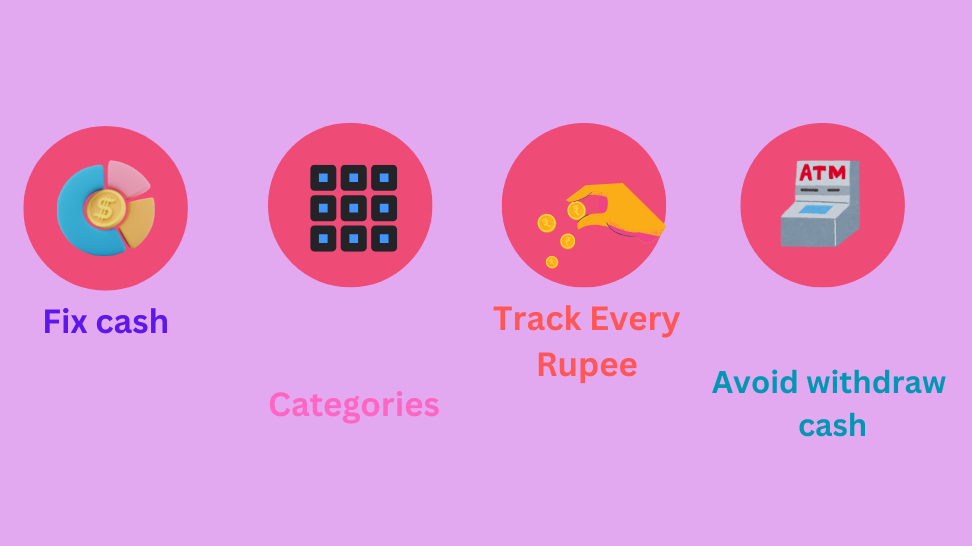
- 🏦 Fixed cash for the month: Withdraw ₹10,000 and use only that.
- 📦 Divide into categories:
- ₹4,000 → Groceries
- ₹2,000 → Transport
- ₹1,500 → Personal
- ₹2,500 → Emergency/Savings
- 📝 Track every rupee: Write date, item, and amount.
- 🚫 No mid-month ATM trips: Once cash is gone, that’s it.
✨ The result? I saw exactly where my money was going, stopped unnecessary spending, and felt in total control — all without feeling restricted. Every rupee spent or saved became a lesson in smart money habits. are the best benefits.
Steps and Rules of “Cash Only Month Challenge”
1. Set a Clear Intention
Before I started, I asked myself — why am I doing this? To save money? To understand habits? To feel in control?
I decided I wanted to save around ₹5,000 in a month. Writing it down and reminding myself daily actually kept me motivated.
2. Withdraw a Fixed Amount for the Month
I withdrew enough cash for the month, for example ₹10,000. Then I divided it:
- ₹4,000 → groceries
- ₹2,000 → transportation
- ₹1,500 → personal expenses
- ₹2,500 → emergency/savings
I put each portion in labeled envelopes. Seeing the cash separated made me instantly aware of where I could spend and where I couldn’t.
3. Stop using digital payments
For a month, avoid UPI, cards, or wallets.
Carrying only cash during the cash only month challenge in India adds a psychological layer of control.
When you carry only cash, you’ll think twice before spending—
You’ll ask yourself, “Is it worth taking money out of my wallet?” And this small pause leads to significant savings.
4. Track every rupee
Keep a small notebook or use your phone’s note app (for tracking purposes only, not for payments).
Every time you spend cash, write down:
- Date
- What you bought
- Amount
Example:
October 7 – Vegetables ₹120
October 7 – Coffee ₹80
Tracking your cash carefully during the cash only month challenge in India ensures nothing is wasted.
At the end of each week, total it up—you’ll be surprised how small expenses add up.
5. Avoid using ATMs mid-month
A key rule of the cash only month challenge is to avoid replenishing funds unnecessarily
In this challenge, don’t replenish your funds until the next month begins.
This teaches discipline—if you run out of money, you’ll learn to adjust, plan, and avoid unnecessary purchases.
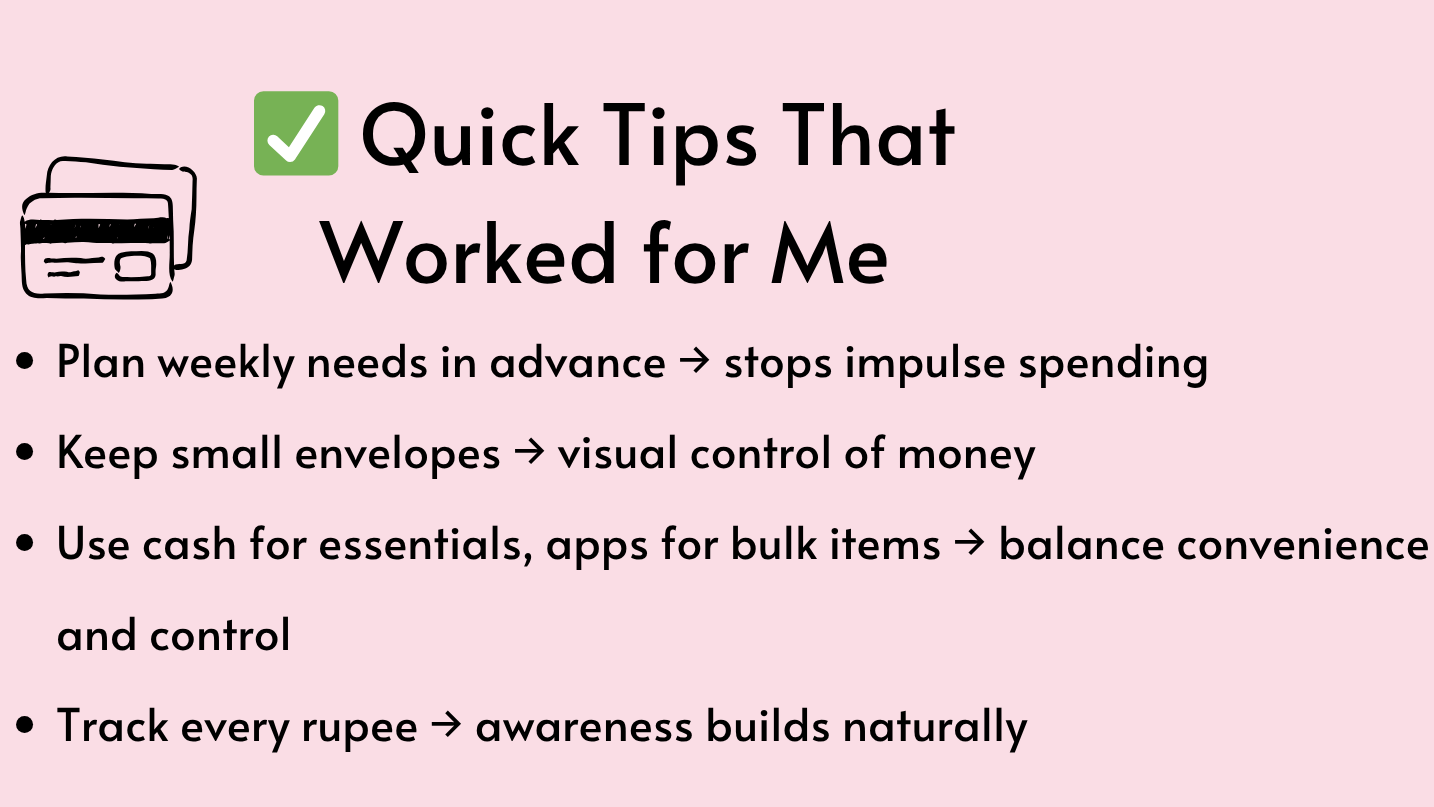
6. Plan your weekly needs in advance
Planning is essential for cash-only months.
Before the start of each week:
- Make a list of your needs (groceries, bus fare, essentials).
- Carry only the amount you need for the week.
- Avoid carrying all your cash at once to avoid impulse purchases.
Example: If you’ve budgeted ₹2,000 for the week, divide it into small envelopes labeled “Monday-Sunday.”
7. Review and Reflect at the End of cash only month challenge
At the end of your 30 days:
- Count how much money you saved.
- Review your notes to see where most of the cash was spent.
- Identify what you need to cut back on next month.
For example, you might realize you spent ₹1,200 on snacks you didn’t need—this awareness is what changes your behavior.
Looking for more helpful articles ? Check out our Digital Payments vs Cash Guide.
📊 Cash vs Digital Spending — A Quick Look
| Feeling | Cash 🪙 | Digital Apps 💳 |
|---|---|---|
| Money leaving | Real — you see it | Invisible — just a tap |
| Awareness | High | Low |
| Impulse buys | Low | High |
| Spending control | Strong | Weak |
| Mindful habits | Yes | Hardly |
🧠 Personal Learnings What I Learn From “Cash Only Month Challenge”
One tiny moment stood out:
I wanted a ₹50 snack online. The app suggested:
“Buy this ₹30 drink too!”
“Add ₹80 more to get free delivery!”
Next thing I know, ₹50 turned into ₹200.
With cash, I never make that mistake — I feel the money leaving my hand, and it hurts… in a good way 😅
💡 Key Takeaways
- Cash = awareness, control, discipline
- Digital payments = convenience, speed, temptation
- Best results come from combining both — cash for daily essentials, apps for heavy or planned purchases.
- Emotional spending reduces naturally with cash in hand.
💬 Frequently Asked Questions: A Cash Only Month Challenge in India
Q1: Is this possible in India today?
Ans. Yes. Most local shops still accept cash. Apps are optional.
Q2: Will it save much?
Ans. Most people save 15–30% by avoiding invisible digital purchases.
Q3: Who should do it?
Ans. Everyone! Income earners, whether high or low, benefit. This challenge builds financial awareness and reduces excessive spending.
Q4: What if an emergency arises?
Ans. Keep a small emergency cash fund or allow digital payments only in case of a true emergency.
✌️ Conclusion
Looking back at my Cash Only Month Challenge, it wasn’t about saving or controlling money — it was about noticing the little things in everyday life. Each moment felt different, more present, more real. 😌
Here’s what stood out:
- 🖐 Every rupee felt real – Physically holding cash made spending feel tangible.
- ⏳ Slower, more mindful choices – I paused before buying, just to notice if I really wanted it.
- 🎯 Small wins mattered – Even saving ₹50 felt like a tiny victory.
- 👀 Awareness over habit – I noticed patterns I never paid attention to before.
- 🌿 Ordinary things felt special – Going to the store, counting change, planning week by week… suddenly, it was more satisfying.
Every rupee spent or saved wisely becomes a lesson in money management. One Month cash only challenge change my daily spending routine.
For more useful articles like this, check out our Telegram channel.
