
What is Digital Distractions- How I Regained Focus and save money [2025 Guide]
Let’s be honest — we all love our phones. I won’t pretend I don’t. They’re tiny powerhouses that keep us organized, entertained, and connected. But somewhere between “just one quick scroll” and “oops, it’s 2 a.m.,” digital distractions quietly steal more than time — they steal focus, calm etc.
A few weeks ago my friend Riya, my teammate Aryan and I realised we were living in those stolen moments. We were together in the same room more often than not, but our attention was scattered across screens. So we tried a small experiment we called Digital Detox Week:
Seven days, no unnecessary notifications, no endless scrolling, no “quick reels before sleep.”
The truth? We realized how addicted we were to being online all the time.
Let’s break down what we learned — and how I can reclaim my focus step by step.
💡 What We Mean by “Digital Distractions”
When I say digital distractions, I don’t mean the big, productive things like online meetings or work emails.
I mean the tiny interruptions that constantly nibble at your attention — notifications, random video recommendations, group chat buzzes, or even the urge to “just check something quickly.”
Here’s what it looks like 👇
| Type of digital Distraction | How It Hooks You | Real Example |
|---|---|---|
| 🔔 Notifications | Creates urgency, breaks your flow | WhatsApp pings during work |
| 🎥 Short Videos | Quick dopamine hits, no mental effort | “Just one reel before bed” |
| 💬 Endless Chats | Feels social but drains energy | Office groups or memes |
| 🛍️ Personalized Ads | Makes you spend impulsively | Buying things you didn’t plan |
| 🧠 Information Overload | Feeds FOMO, makes focus harder | Constantly checking news or trends |
Each of these looks harmless — but together, they fragment your attention span like a cracked mirror.
And that’s exactly what we learned during our detox.
Also read- App vs Offline Store For Grocery Shopping— Which is better choice for my daily spending.
What We Tried
No complicated rules. Just small, mindful changes:
- We muted all non-essential notifications.
- Phones stayed away during meals.
- We allowed only three social check-ins a day.
- And we kept one hour completely offline every morning and night.
It wasn’t about giving up technology — it was about taking control back.
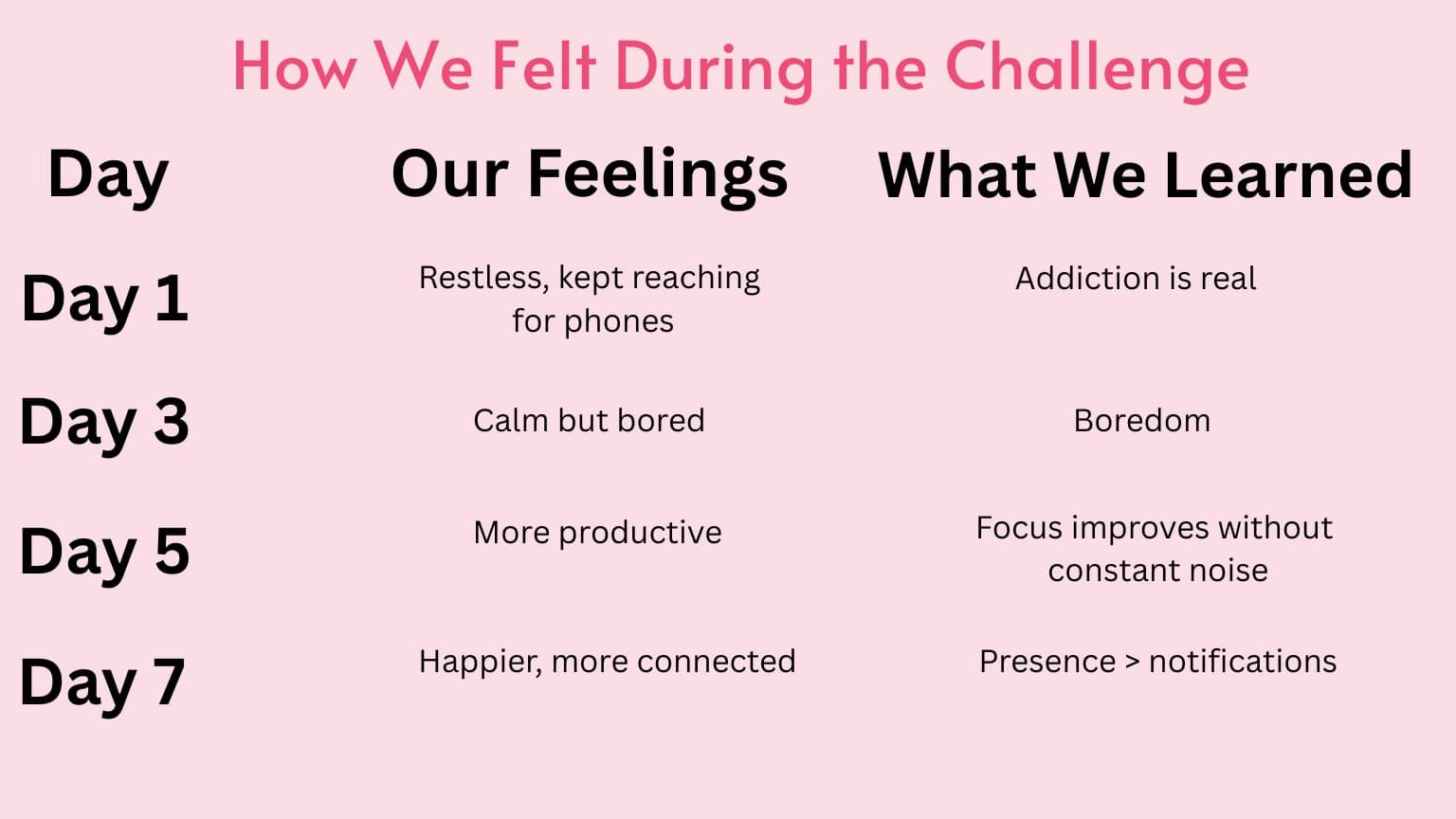
💬 Day One: The Restless Silence
The first day was strange. I’d pick up my phone automatically, realize there were no alerts, and feel a weird emptiness. My friend Aryan said,
“It feels like the world went quiet, but my head’s still noisy.”
That’s when we understood how deep these digital distractions go.
We weren’t using our phones anymore — our phones were using us.
🧠 Why These Distractions Hit So Hard
To really understand it, we dug deeper — and found that digital distractions work on a neurological level.
| Trigger | What Happens in the Brain | Result |
|---|---|---|
| Notifications | Dopamine spike → craving | You check without thinking |
| Constant switching | Brain resets focus | Work takes longer |
| Endless feeds | Novelty reward loop | You lose track of time |
That’s why an hour of scrolling can leave me mentally exhausted, even if i didn’t “do” anything.
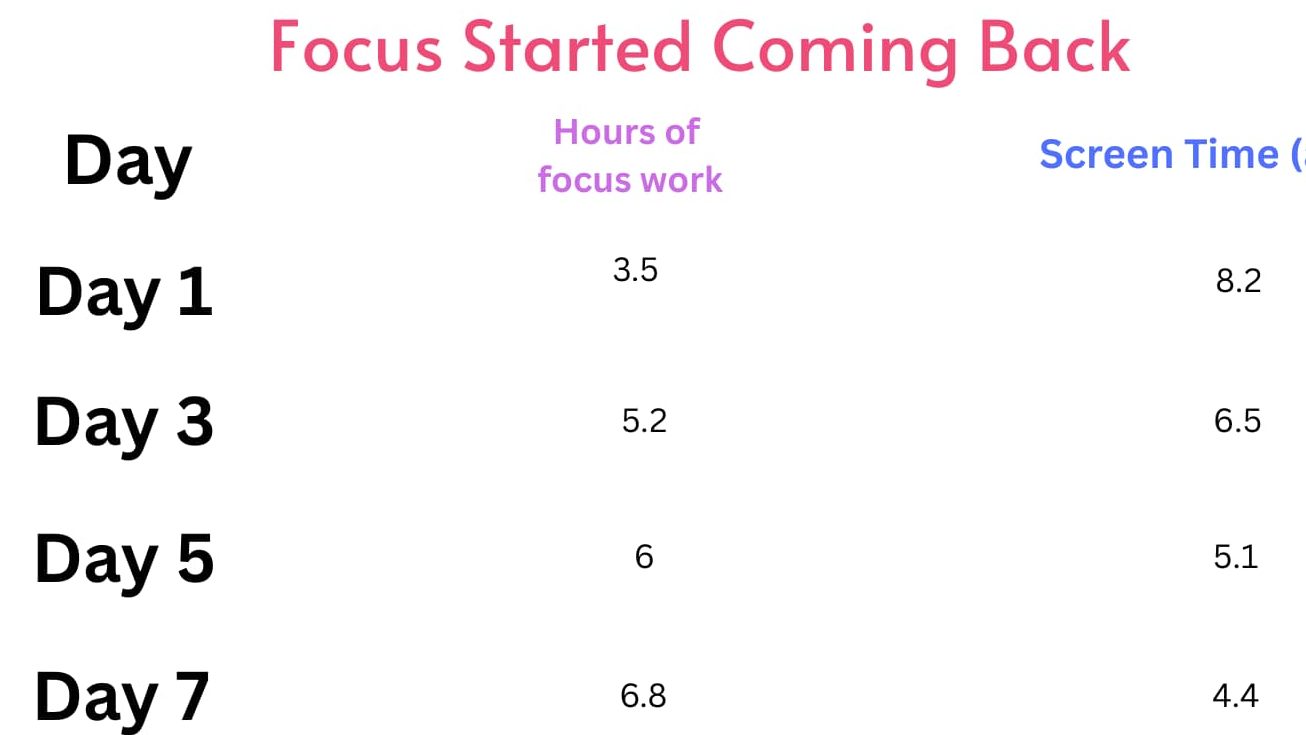
🌿 Day 3–5: Focus Started Coming Back
By midweek, I noticed something.
“I finished my report in half the time today. No scrolling breaks.”
We compared notes — all three of us had started sleeping better, finishing work faster, and feeling calmer.
We didn’t just gain time — we gained mental space.
🌞 Day 6–7: The Calm Returns
By the weekend, something beautiful happened — boredom.
Not the “ugh I’m bored” kind, but the natural space your brain gets when it’s not overstimulated.
My friend Riya started sketching again. Aryan went on an evening walk without music for the first time in months.
And me? I started exercise at home.
It wasn’t a digital detox anymore — it felt like coming home to a quieter version of ourselves.
⚖️ Before vs After Our Digital Detox
| Aspect | Before | After |
|---|---|---|
| Screen time | 35+ hours/week | 20 hours/week |
| Focus rating (self) | 4/10 | 8/10 |
| Sleep quality | Interrupted | Deep & consistent |
| Conversations | Shallow & distracted | Engaging & real |
| My Energy levels | Drained | Refreshed |
🧘♀️ Why Digital Distractions Cost Us More Than Just Time
We used to think scrolling only wasted a few minutes. But once we started observing closely, we realized the cost runs much deeper.
It’s not just about hours lost — it’s about mental clutter.
Every notification we check switches our focus. Studies call this attention residue — the leftover noise in your brain that stays even after you put the phone down.
The Real Cost:
- 💤 Shallow sleep
- ⏳ Delayed tasks due to micro interruptions
- 😩 Reduced creativity and problem-solving
- 💸 Impulsive purchases triggered by ads
Also check our One-Week-Cash-Only-Challenge.
Simple Ways To Control Digital Distraction
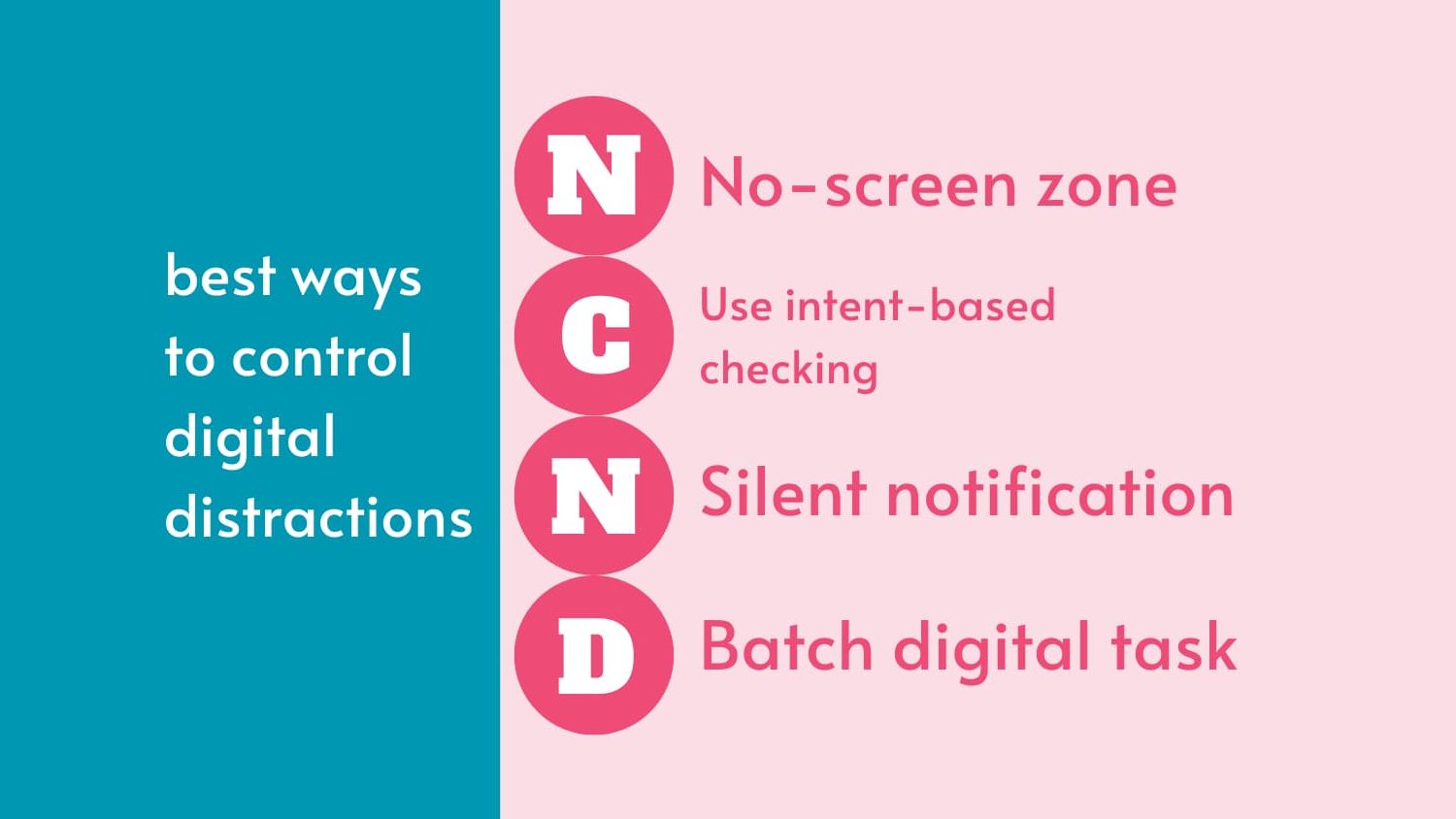
💡 1. Set Clear “No-Screen Zones”
You don’t have to throw your phone away — just give it limits.
When you decide that your dining table, bedroom, or morning routine is a screen-free zone, your brain starts to recognize these spaces as safe from digital noise.
🎯 2. Use “Intent-Based” Checking — Ask Before You Tap
Here’s a golden rule:
Every time you unlock your phone, ask yourself, “Why am I here?”
Sounds silly, right? But this tiny pause helps your brain switch from autopilot to awareness.
📱 Example:
When I started using this rule, I realized half the time I opened Instagram “just because.”
Now, I check it with intent — for 10 minutes to post something or reply to DMs, and that’s it.
This trick single-handedly cut my digital distractions by nearly 40%.
Try it for a day — you’ll be surprised how often you open apps without purpose.
🔕 3. Silence Non-Essential Notifications — Peace Is Productivity
Let’s be real: not every buzz deserves your attention.
Most notifications are just digital noise designed to pull you back into the app.
⏰ 4. Batch Digital Tasks — Because Focus Loves Structure
Instead of constantly checking my phone, i set fixed windows for all digital tasks — messages, emails, updates.
For example:
- Morning: 9:30 AM – 10:00 AM
- Afternoon: 1:00 PM – 1:15 PM
- Evening: 8:30 PM – 9:00 PM
This technique is known as “time batching.”
📖 What This Experiment Taught Us
After our seven-day detox, we didn’t delete everything or go “off the grid.”
We just learned to use our devices — without letting them use us.
Here’s what stuck with us:
- Silence isn’t boring — it’s healing.
- Most scrolling isn’t relaxation — it’s avoidance.
- No extra mobile apps subscriptions
Now, even back online, our phones don’t control us the same way. Notifications are off.
Frequently Asked Questions (FAQs)
Q1. What are examples of digital distractions?
Ans. Anything online that takes attention from your main task — messages, pop-ups, videos, or endless scrolling.
Q2. Are digital distractions harmful?
Ans. Yes, over time they reduce productivity, increase anxiety, and weaken attention span.
Q3. Can I still enjoy social media without distractions?
Ans. Absolutely. Set limits, follow purposefully, and unfollow what drains energy.
Q4. How long does it take to see improvement after reducing distractions?
Ans. Most people feel the difference in 3–5 days — better focus, calm, and mental clarity.
Q5. Is avoiding digital distractions possible for students or professionals?
Ans. Yes, start with small steps — like “no screens during meals” or limited app usage windows.
🪞Conclusion
The truth is, digital distractions aren’t bad by themselves. They’re just designed to be louder than your thoughts.
When our team tried this, we didn’t discover a miracle.
We just rediscovered ourselves.
Quiet moments. Focused hours. Real laughter.
The kind of things no app can replicate.
So start small. like- us Choose one quiet meal, one screen-free hour. Let the silence speak — it will remind me that the best notifications in life don’t need a sound.
We’re not digital minimalism experts — just regular users who wanted more focus. What worked for us might inspire you too. For more useful advice, check out our Telegram channel.
